Social Media Post-Bill C-34: Big Changes Ahead

Social media marketing has completely transformed how businesses connect with younger consumers. Platforms like TikTok, Instagram, and YouTube have enabled businesses to reach specific audiences based on their interests and online activity.
However, the future of reaching younger audiences through these platforms may soon change significantly.
The proposed Safe Social Media Act (Bill C-34) introduces a ban on social media accounts for kids under 16 years of age. This legislation focuses on protecting children from online harm, but it could significantly change how businesses reach younger consumers. For years, brands have been using social media as a direct path to understand consumer preferences, build awareness, and influence purchasing decisions. As access to these platforms faces a major change, businesses will need new ways to understand and reach younger consumers.
This shift highlights a much larger marketing trend. As digital platforms become more restricted, consumer intelligence will become far more valuable.
Organizations that begin diversifying their consumer insights now will be better prepared for future regulatory changes.
The Rise of Social Media Marketing Among Younger Consumers
Social media has become one of the most influential marketing tools for reaching younger generations over the past decade. Historically, marketing meant relying on broad demographic categories such as gender, location, and income. Social media changed this approach completely.
Platforms gained the ability to reach consumers based on detailed online behaviours. For example, brands could target users who were interested in specific products, follow trending conversations, and create incredibly targeted campaigns.
For younger individuals, social media is no longer just a communication tool. It has become the primary place for discovering brands, researching products, following influencers, and developing purchasing preferences.
This created a lucrative opportunity for companies. For example, a clothing retailer could reach users interested in similar fashion. A gaming company could connect with specific communities. A food brand could promote their products to people based on their lifestyles and interests.
This approach heavily depends on access to platform data. As governments introduce stronger protection for kids under 16, businesses may need to rethink how they can reach these audiences.
What Is Bill C-34 and Why Does It Matter?
The Safe Social Media Act (Bill C-34) was designed to address concerns about children’s online safety.
Rather than creating a complete social media ban, Bill C-34 focuses on protecting youth under 16 years of age. The bill includes an exemption process where platforms can keep younger users on, but only if they can prove to regulators that they have strict child-safety safeguards in place. This places a massive responsibility on the platforms to fundamentally change how they operate.
The goal is to reduce the risk associated with online platforms, like exposure to harmful content, privacy concerns, and other negative experiences such as cyberbullying.
- For families, this bill represents a growing focus on children’s safety on digital platforms.
- For businesses, it represents a major change in how they connect with their younger consumers.
Many companies have built their marketing campaigns around the assumption that social media platforms will provide them with direct access to consumers under 16.
While many purchasing decisions for younger consumers are ultimately made by parents or guardians, businesses have increasingly relied on social media to build brand awareness and influence purchasing preferences before those purchasing decisions occur.
If platforms become more limited to users under 16, businesses will have less visibility into the behaviours and preferences of this demographic. However, this does not mean they can no longer market to this age group. Instead, they must find a new way to understand these audiences without relying purely on social media activity.
How Social Media Marketing Strategies May Change
The biggest impact of the proposed social media regulations is not necessarily the loss of advertising opportunities; it is the loss of consumer insights.
For years, businesses have used social media platforms to understand trends in real time. With the help of engagement data, follower behaviour, and online communities, companies have been able to identify what products and messages resonate best with specific audiences.
If access to this information were to become limited, businesses would need to find alternative sources of consumer intelligence.
Future marketing strategies will need to rely more heavily on consumer intelligence, geographic analysis, and household-level data.
Instead of seeing who engages with their content online, businesses will need to ask: “Who are our customers, where are they located, and what influences their purchasing decisions?”
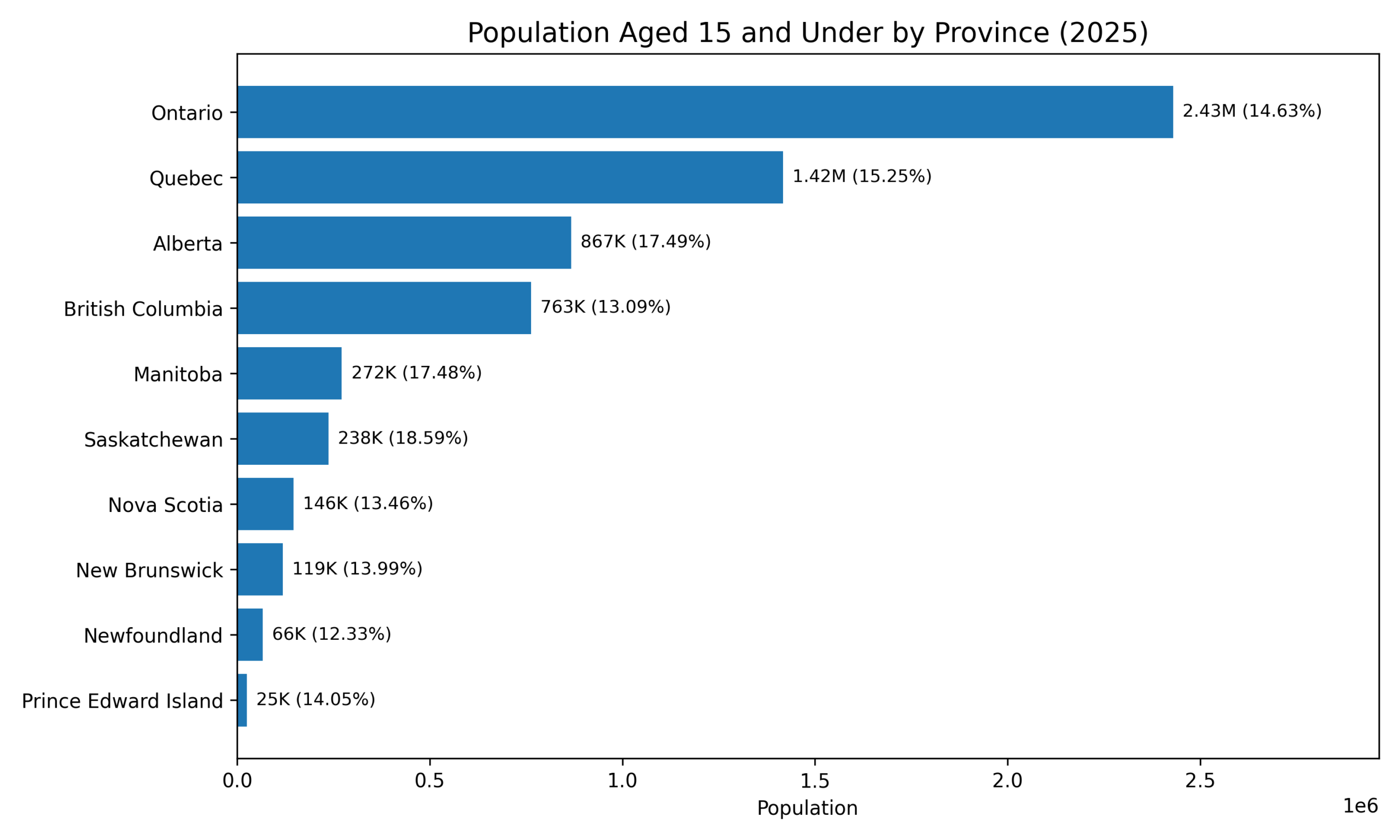
Canadian population aged 15 and under by province, highlighting the geographic distribution of the demographic most impacted by Bill C-34.
This shift drives a move away from relying solely on platform-based marketing. Instead, it creates an opportunity for businesses to develop a true understanding of their customers.
Consumer Intelligence Provides a New Path Forward
Consumer intelligence allows businesses to understand audiences beyond online activity.
While social media provides valuable information about engagement, it does not always explain the factors that influence consumer behaviour. Instead of relying on social media engagement alone, businesses will need a broader understanding of the consumers they serve, such as:
- Household income levels
- Family structures
- Spending habits
- Regional differences
- Consumer preferences
- Lifestyle characteristics
For example, a company that sells youth-focused clothing needs an understanding of the households making purchasing decisions, not just the teenagers they hope to reach.
Parents and guardians often influence spending decisions on:
- Clothing
- Technology
- Sports equipment
- Entertainment
- Education service
- Food and beverages
Understanding household behaviour provides businesses with a more complete view of the market. These insights help explain consumer decisions in ways that social media engagement alone cannot.
Why Social Media Marketing Needs Better Consumer Data
Social media marketing has made it far easier for brands to reach their consumer base.
However, platforms change quickly. Algorithm updates, privacy regulations, and new legislation can all affect how businesses connect with their audience.
This creates a challenge for companies who depend heavily on a single marketing channel. Consumer intelligence can provide a much more stable foundation.
By understanding demographics, purchasing behaviours, and geographic trends, businesses can make informed decisions regardless of changes to digital platforms. For marketers, this means moving away from volatile app data and leaning on dedicated consumer intelligence platforms to truly understand who their customers are.
The Future of Reaching Younger Consumers
Bill C-34 is only a part of a much larger shift happening across the digital marketing landscape.
Businesses are facing a future with:
- Higher privacy protection
- Greater regulation of online platforms
- Reduced access to third-party data
- Changing consumer expectations
The companies that will be successful are the ones that adapt.
Understanding consumers will require more than social media engagement data. Businesses will require data that explains the purchasing behaviour, household characteristics, and market opportunities.
The future of marketing will not depend on having access to all of the digital interactions of consumers. It will depend on having the right information to make better business decisions.
How Polaris Intelligence Helps Businesses Understand Consumers
Polaris Intelligence provides businesses with detailed consumer insights that go beyond traditional digital marketing data.
By combining demographic, behavioural, spending, and geographic information into one platform, we help businesses better understand Canadian consumers and identify new opportunities.
As social media marketing continues to evolve, companies need reliable consumer intelligence to build effective marketing strategies.
Understanding consumers has always been the foundation of successful marketing. As digital platforms evolve, businesses that invest in deeper consumer intelligence will be the ones best positioned to adapt.
 Powered by