Demographic Chaos: How to Profit From 4 AM FIFA Crowds
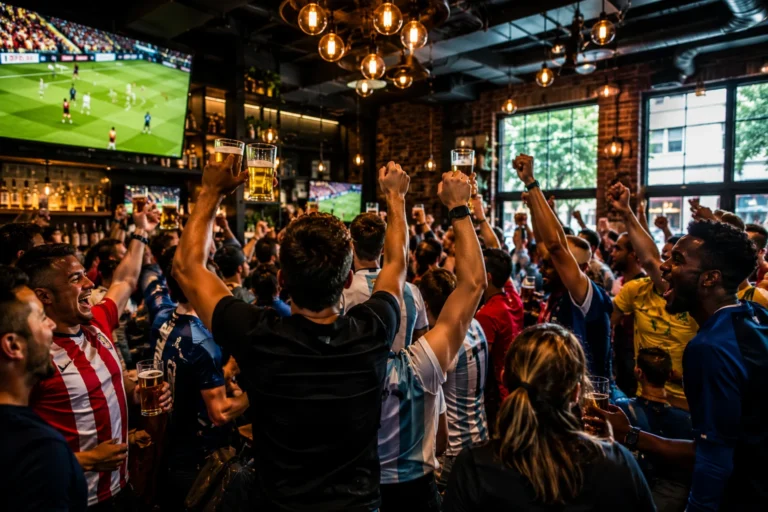
A unique consumer demographic takes over Toronto every four years, transforming the city into a massive FIFA World Cup party. Global fans pack local viewing parties. Consequently, a major opportunity emerges for B2C brands. Tracking this changing consumer demographic is now essential for business growth.
This highly anticipated tournament introduces a unique challenge for sectors like retail, quick-service restaurants (QSR), and consumer packaged goods (CPG). Traditional marketing campaigns struggle to resonate with the city this summer. Right now, fans are rallying behind dozens of international teams. In fact, we previously mapped out how diverse these regional preferences are across Canada in our post, Where Are The Soccer Fans. Smart businesses must pivot toward hyper-local advertising strategies to reach their desired customer base.
In this post, we will explore how forward-thinking companies use advanced location intelligence to map out the sports-driven cultural hubs. We will also outline exactly how you can align your local marketing with shifting consumer patterns before the final whistle blows.
The 90-Minute Neighbourhood Shift
During a normal summer night, Toronto follows a pretty steady rhythm. Downtown workers head to their homes in the suburbs, the patios fill up on those sunny afternoons, and the malls fill up for some after work shopping. However, these regular patterns have completely diminished as the World Cup takes over the city. Within hours, Toronto’s commercial gravity shifts towards specific cultural hubs.
When major teams play, thousands of fans migrate to specific neighbourhoods simultaneously. For example, business slows down in some areas while certain strips experience a massive economic boom. The patios on College Street or St. Clair Avenue West overflow into the sidewalks, transforming into a stadium-like atmosphere. This sudden local migration completely alters the neighbourhood demographic profile for the afternoon. The areas around the Toronto Stadium (BMO Field) and around the locations of watch parties become completely flooded as a result.
This sudden shift creates a unique puzzle for local businesses. A convenience store by Nathan Phillips Square might completely sell out. Yet, a Metro five blocks away experiences no positive change. The normal rules of consumer demand simply do not apply when national pride is on the line.
To understand this chaotic shift, we must study how these fan communities form. It’s not luck that brings these individuals together. The deep-rooted cultural history embedded into the city’s pavement is what causes these clusters throughout the city.
By leveraging the Vividata Sports Study within Polaris, brands can analyze hyper-local fan clusters. You can filter by specific consumer metrics like Favourite Team, Sports Fandoms, and Language Watch Sports In. This allows you to predict exactly which neighbourhoods will surge before a match even kicks off.
The Demographic Pressure on Toronto Infrastructure
This abrupt change creates a massive revenue spike for local businesses, but it completely strains the city’s infrastructure. A temporary provincial law now allows extended alcohol service hours. Toronto restaurants and bars can now serve until 4 AM instead of 2 AM. As a result, Toronto nightlife has become more fun than ever, and local businesses capture thousands in additional revenue. From neighbourhood pubs screening matches to official city-wide watch parties, local establishments constantly operate at maximum capacity.
However, extending the night until 4 am most likely means a lot of individuals will have to get an Uber instead of taking the GO or the TTC. Currently, most public transportation services stop running at approximately 2 am on weekends. This includes both the TTC and GO buses. The TTC will have extended hours for certain match days, but only a couple of these days are on the weekend. So, a typical $8 trip on GO transit can easily become $70+ on these late summer nights. These transportation changes influence how long customers stay, where they choose to visit, and how much they spend on their night out.
Meanwhile, this pressure extends to public event sites like the official FIFA Fan Festival at Fort York. This engaging fair hosts tens of thousands of soccer fans a day for their live match broadcasts, concerts, and activities by sponsors. Interestingly, the guest services and transportation network at this massive venue is run mainly by unpaid volunteers. These dedicated individuals work long, exhausting hours in the summer heat, just to keep this festival free and accessible to all. These large-scale events demonstrate how a temporary demographic shift creates new demand for businesses, transportation, and public services.

Photo credits: City of Toronto
Case Study: The Madison Avenue Pub
While these massive demographic shifts are visible at a city-wide level, how do they translate to an individual business’s bottom line? To understand the high-stakes decisions facing local operators, we can model the potential impact on a Toronto staple: The Madison Avenue Pub.
The Maddy is a high-traffic downtown venue popular with young adults, and is a perfect example of increased revenue resulting from the World Cup. This bar is located in the heart of downtown Toronto by Spadina station. The Maddy is unlike any other bar or club downtown. It is built across several interconnected Victorian houses and has multiple floors. Each floor has a completely different atmosphere. Some areas are similar to a traditional pub, while some are more similar to a nightclub. This location easily captures the entire night out; some fans go there to watch the game, and can easily transition to a nightclub atmosphere by simply going up a couple stairs.
This bar is always packed on a regular night, so imagine how big of a difference the World Cup makes for them. Fans arrive before the match or throughout the game for some beers and appetizers/mains, and stay for the celebration afterwards. Under the temporary provincial law, venues like The Maddy have the legal option to extend alcohol service by two additional hours. For a massive venue, pulling that trigger is a major operational gamble. Let’s look at what a data-driven simulation of that extended footprint looks like.
Estimating the Business Impact
The Maddy has a capacity of 2,000 people across its 6 floors. Let’s say on a typical weekend night, there are 1,200 people inside. The Piano Bar and the heated patio are usually at 100% capacity. The other floors are often about halfway full, but due to the screening of the soccer matches, those have been filling up too.
As an estimate, let’s say an additional 500 people attend the bar for these games. For dinner and one drink, each person would have to spend around $25. The majority of the customers usually have more than one drink, especially on these crowded summer nights. Based on this estimate, the establishment generates an additional $12,500 simply by attracting more customers. This number does not account for repeat drink purchases or extra dwell time. With the extended hours, people end up spending much more on drinks too. Each drink is between $5.50 – $12, which means if even 25% of capacity sticks around for the two additional hours and has one drink an hour, they could spend at least $5,500.
Based on this estimate, the change caused by the World Cup could generate an additional $18,000 in revenue for this pub in one night. One weekend (Thursday, Friday, Saturday) could represent approximately $54,000 over a weekend.
Although these numbers are purely hypothetical and no public data about The Maddy’s revenue is available, this demonstrates a larger trend happening in Toronto. Major sport events don’t just bring new business, they change how long customers stay, where they choose to spend their money, and when a business can capture the most revenue.
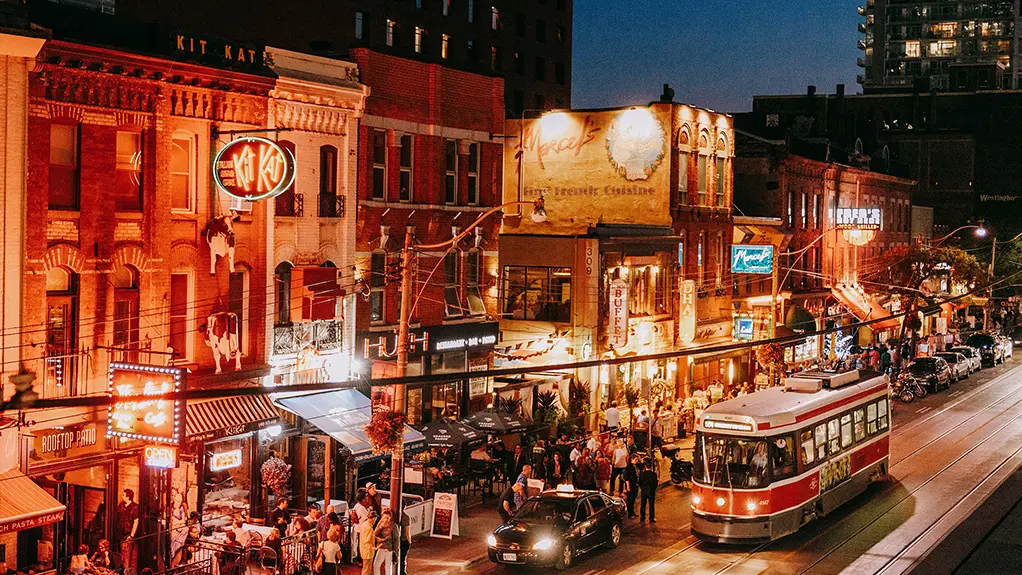
Photo credits: destination Toronto
However, capturing that extra late-night revenue depends entirely on one critical variable: will the foot traffic actually stay in the neighbourhood past 2:00 AM? This is where location intelligence becomes essential. Instead of blindly eating the overhead costs of staying open until 4:00 AM and hoping for the best, forward-thinking businesses use human mobility data to track real-time crowd density. They can see exactly which corridors remain packed into the early hours of the morning and which ones empty out the minute the subways close. This allows them to make data-backed operational decisions rather than expensive guesses.
The Small Business Demographic Reality Check
While a Toronto staple like The Maddy naturally attracts an endless crowd, smaller businesses are faced with a much tougher battle. Keeping their doors open for an additional two hours will not necessarily mean more traffic. Instead, local bistros and independent lounges face tight margins, higher staff costs, and intense competition from official FIFA fan sites.
Therefore, investing heavily in marketing campaigns during this massive global tournament may result in a bigger loss of capital. Smaller brands need a way to understand which local fan communities will walk through their doors.
Securing Your Matchday Victory
 Powered by